
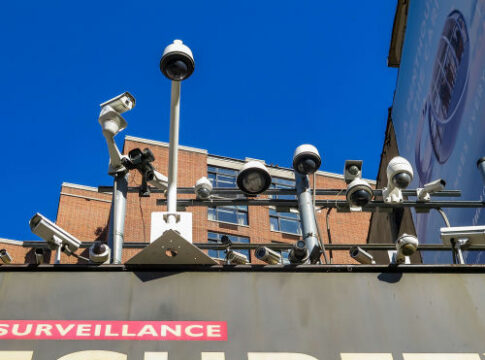
San Diego State University quietly wired its dormitories and campus with more than 1,300 artificial intelligence-enabled cameras — and students say they had no idea it was happening.
Story Snapshot
- San Diego State University’s police department spent over $1.3 million upgrading more than 1,300 surveillance cameras across campus, including residence halls, in 2024.
- Students were not directly informed about the AI-enabled upgrade, raising serious questions about consent, transparency, and the limits of campus surveillance.
- University officials say the artificial intelligence features are used for technical diagnostics and anomaly detection — not facial recognition or individual tracking.
- Privacy advocates warn that weak disclosure and unclear data retention policies create the conditions for mission creep, regardless of stated intent.
A $1.3 Million Surveillance Upgrade Students Didn’t Know About
San Diego State University’s (SDSU) police department completed a roughly $1.3 million camera infrastructure upgrade in 2024, replacing and expanding a campus-wide network to include more than 1,300 artificial intelligence-enabled surveillance cameras. The cameras were installed across campus, including in and around residence halls where thousands of students live. The upgrade was first reported by the student newspaper, The Daily Aztec — not announced directly to students by the university administration.
SDSU’s own housing materials confirm that “security cameras monitor indoor and outdoor communal areas,” but that language appeared on the university’s Services and Amenities page without any specific disclosure about the AI capabilities of the new system. Students who learned about the upgrade through media coverage expressed surprise and concern — not because cameras existed, but because the artificial intelligence features had never been clearly communicated to them before installation.
What the University Says the Cameras Actually Do
University police have pushed back on the most alarming interpretations of the system. Officials stated that the artificial intelligence features are used primarily for system reliability — identifying when a camera goes offline, detecting technical anomalies, and ensuring the network functions properly. According to reporting, university representatives specifically denied that the cameras are used for facial recognition or for tracking individual students’ movements and behavior across campus.
The university’s position is that this upgrade is a modernization of an existing, long-established security infrastructure — not a new surveillance program. SDSU housing materials have referenced camera monitoring in communal residential areas for years, and officials argue the AI component is a backend maintenance tool rather than an active behavioral monitoring system. That framing, if accurate, would significantly reduce the immediate privacy threat — but it does not resolve the transparency problem.
Why the Lack of Disclosure Is the Real Issue
Even if the university’s technical explanation is taken at face value, the core concern remains: students living in campus housing were not told that the security cameras monitoring their daily movements had been upgraded with artificial intelligence capabilities. The distinction between a standard camera and an AI-enabled one is not trivial. Artificial intelligence systems can, depending on configuration, enable behavioral pattern analysis, automated alerts, and data aggregation that standard cameras cannot.
This situation reflects a pattern seen at universities and public institutions across the country. Administrators expand surveillance infrastructure under the banner of campus safety, describe the technology in the most benign terms available, and rely on buried fine print rather than direct communication to satisfy any legal notice requirements. Students — who pay to live in these dorms and have a reasonable expectation of some degree of privacy in their daily lives — are left to find out from a student newspaper or a local TV report. The absence of clear policies governing data retention, access by law enforcement, and the future use of AI-collected data compounds the concern. Transparency after the fact is not the same as informed consent before installation. Whether someone leans left and worries about government overreach into personal lives, or leans right and distrusts institutional power operating without accountability, the underlying problem here is the same: those in charge made a significant decision affecting thousands of people and chose not to tell them about it clearly or directly.
Sources:
[1] Web – SDSU Wired Its Dorms with 1,300 AI Cameras Without Telling Students
[2] Web – Is SDSU watching? See where the university put its AI-enabled …
[3] Web – Services & Amenities – SDSU Housing – San Diego State University
[4] Web – 1,300 AI-Enabled Cameras At SDSU – DegreeInfo
[5] Web – SDSU AI Surveillance Cameras: Governance, Consent, and Student …
[6] Web – SDSU to spend $1.3M on AI-enabled surveillance cameras
So, I guess the reality of everything you do is being caught on camera just can’t be ignored, even at your CA institution of indoctrination.