
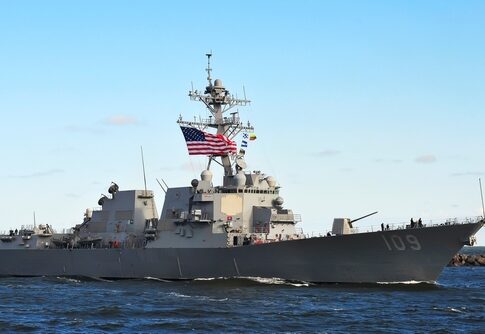
As U.S. forces knock more Iranian drones out of the sky over the Strait of Hormuz, Washington is weighing a move that could hit Tehran’s wallet hard by tapping frozen Iranian assets to shield American and allied interests.
Story Snapshot
- U.S. Central Command says American forces shot down multiple Iranian attack drones headed toward the Strait of Hormuz, calling them an “immediate threat” to shipping.
- Iran accuses the United States of harassment and vessel seizures, trying to flip the script and portray itself as the victim.
- Trump‑era pressure now reportedly includes exploring use of frozen Iranian assets to compensate Gulf partners targeted by Tehran’s missiles and drones.
- The fight over drones and dollars is part of a larger struggle to keep vital energy lanes open and stop Iran from financing terror across the region.
U.S. Shoots Down Iranian Drones Threatening a Critical Energy Lifeline
U.S. Central Command reported that American forces shot down at least four Iranian one-way attack drones that were launched toward the Strait of Hormuz and “posed an immediate threat to regional maritime traffic.”[3][8] The command said the drones were intercepted before they could endanger commercial shipping, and that U.S. forces subsequently struck Iranian coastal surveillance radar sites in Goruk and on Qeshm Island to “defend against further attacks,” underscoring a posture of active self-defense rather than passivity.[3][7][8]
Additional statements from U.S. Central Command, echoed in Associated Press and regional coverage, stressed that American forces “remain vigilant and postured to respond to unjustified Iranian aggression in self-defense.”[6][8] Reports from outlets citing the same military briefings say the drones were part of a wider salvo that included Iranian ballistic missile launches toward Kuwait and Bahrain, which U.S. forces also intercepted, putting further strain on an already fragile ceasefire but arguably preventing a wider regional disaster for U.S. partners and global energy markets.[4][12]
🔴WAR ON TERRORISM: IRAN 🇮🇷 🔴/Arutz Sheva/
CENTCOM shoots down two Iranian drones over Strait of Hormuz
CENTCOM announces that US forces shot down two Iranian attack drones in the Strait of Hormuz.
US Central Command (CENTCOM) announced on Saturday that US forces in the… pic.twitter.com/lEy3Cme2Fm
— JAVIER YEARSON 🇮🇱 Journalist. Broadcaster 🌱 (@javieryearson) June 7, 2026
Tehran Cries Foul as Evidence Shows an Escalating Drone and Missile Campaign
Iran’s naval forces, through state media quoted in British reporting, claimed they were merely firing “warning missiles and drones” at U.S. warships in the Gulf of Oman and accused the American navy of harassing maritime traffic and seizing commercial vessels and oil tankers.[4] That narrative stands in stark contrast to the U.S. account that emphasizes attack drones launched toward international shipping lanes and the subsequent necessity of disabling coastal radar sites that enable targeting of ships transiting the Strait.[3][7][11]
Live updates tracking the confrontation describe a pattern that matches long-running U.S.–Iran tensions in these waters: Iran escalates with drones and missiles, the United States intercepts and then hits enabling military infrastructure, and Tehran responds with accusations that Washington has violated ceasefire terms.[3][4][11][12] For American readers watching energy prices and regional stability, this cycle matters because roughly one-fifth of globally traded oil has historically passed through the Strait of Hormuz, making any sustained disruption a direct threat to U.S. economic and national security interests.[3]
From Drone Shootdowns to Financial Pressure: The Question of Frozen Iranian Assets
Reporting on the broader conflict notes that as U.S. forces provide “naval overwatch” and keep tally of nearly one thousand commercial vessels moving through the Strait during the ceasefire period, the administration is simultaneously ramping up pressure on Tehran in other domains.[3][12] Besides the drone and missile interceptions, U.S. forces recently boarded a sanctioned oil tanker linked to Iran in the Indian Ocean, part of a strategy to prevent the regime from profiting off oil exports that can bankroll missile arsenals, proxy militias, and nuclear advances.[12]
Within this context, proposals to use frozen Iranian assets to compensate Gulf allies targeted by Iranian aggression fit a broader conservative logic: make the aggressor, not U.S. taxpayers or consumers, bear the cost of destabilizing behavior. Public reporting already shows Washington striking Iranian radar and seizing Iran-linked shipping as lawful responses tied to sanctions enforcement and self-defense.[3][8][12] Extending that approach to frozen funds would intensify pressure without putting American troops under additional rules-of-engagement constraints that favor Tehran, while signaling that every drone launch carries a concrete financial price for the regime.
Strategic Stakes for American Energy Security and Constitutional Authority
Coverage of the current standoff makes clear that the Strait of Hormuz remains a flashpoint where “gray-zone” tactics—deniable drones, episodic missile fire, harassment of tankers—test U.S. resolve without crossing fully into declared war.[3][5][11] By providing continuous naval overwatch, the United States has helped return ship traffic to higher levels than many analysts initially believed possible under the ceasefire, suggesting that firm deterrence can keep oil and goods moving even while negotiations with Tehran stall.[3] That posture supports American families at home by reducing the risk of renewed energy shocks.
At the same time, the pattern of rapid U.S. military action followed by Iranian denials and propaganda underscores why Congress and the White House must stay aligned on constitutional war powers and oversight. The available reporting shows U.S. operations tightly framed as self-defense against clearly identified threats to international shipping, with no evidence of open-ended nation-building or unauthorized regime-change campaigns that burned U.S. credibility in past decades.[3][7][8][12] For conservative readers, the emerging doctrine is straightforward: defend American lives and commerce decisively, hit back at the sources of aggression, and use lawful financial tools—including frozen assets and sanctions enforcement—to ensure the Islamic Republic, not American citizens, pays the bill for its own hostile choices.
Sources:
[3] Web – Centcom says US forces shot down Iranian drones near Strait of Hormuz
[4] Web – The Strait of Hormuz is more open than previously thought as the U.S. …
[5] Web – Live Updates: Iran accuses U.S. of violating ceasefire after both …
[6] Web – Iran war live: Two more drones downed over Strait of Hormuz
[7] YouTube – US shoots down Iranian drones launched toward Strait of Hormuz
[8] YouTube – US Shoots Down Two Iranian Drones In Strait of Hormuz …
[11] Web – US military says it shot down Iranian drones launched toward Strait …
[12] Web – US forces shot down four Iranian drones headed toward Strait of …
Enough playing Iran’s games. The U.S. and Israel know all of the strategic targets so just blast them all.
The world will be a better place by the end of the week !!!!