
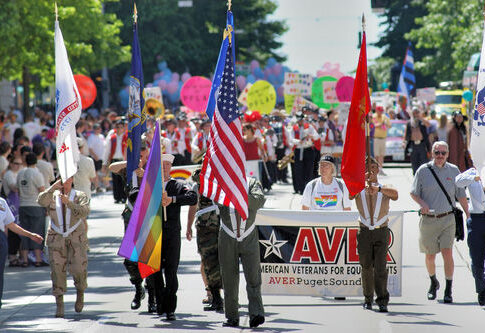
The controversy over alleged illegal nudity at the 2026 Seattle Pride Parade is less about one afternoon in downtown Seattle than about a broader collision of values: how a city defines “family-friendly,” what counts as public indecency under local law, and who gets to frame LGBTQ+ visibility for the wider public.
Key Points
- Seattle Pride 2026 was a large, officially sanctioned, police-secured event with hundreds of contingents and hundreds of thousands of attendees, framed by organizers and partner media as joyful and inclusive.
- Conservative and right-leaning commentators circulated viral clips and social posts alleging fully nude adults near children, branding the event “illegal activity” and attacking city leadership.
- Mainstream local coverage and Seattle Pride’s own materials do not corroborate specific claims of unlawful conduct or policing failure; available footage and reports emphasize celebration, not scandal.
- The dispute sits inside a recurring national pattern: Pride is simultaneously celebrated as liberation and condemned as indecent, with arguments hinging on differing moral norms, not just on the letter of the law.
Seattle Pride 2026: Scale, Structure, and Official Framing
To understand why allegations of “illegal activity” at Seattle Pride land so explosively, you first have to appreciate the scale and institutional heft of the event itself. Seattle’s main Pride parade has been part of the city’s civic calendar since the 1970s, evolving from a protest march of a few hundred people into a centerpiece event that now draws hundreds of thousands downtown. In 2026, the parade theme was “Rally,” explicitly tying present-day celebration to a lineage of LGBTQ+ organizing and protest.
Organizers and media partners presented Pride not as a fringe demonstration but as a marquee civic gathering. Seattle Pride’s own event materials describe the parade as Washington’s largest, with more than 250 marching entries and roughly 300,000 spectators lining downtown streets. KIRO 7, the local CBS affiliate and official TV partner for Seattle Pride for a decade, devoted multi-part coverage to the parade, emphasizing the sheer size of the contingents, the presence of trans and communities-of-color flags, and messaging from local officials about King County as a welcoming place for all. The parade route, timing, and transition into after-parties and PrideFest at Seattle Center were all formally scheduled and publicly promoted.
Policing at the event likewise followed established protocols. Seattle Pride’s public-facing materials describe a coordinated approach to safety, including security planning and structured interactions with law enforcement around marching contingents. That matters for the legality debate: this was not an unpermitted street gathering, but a municipally integrated event with explicit expectations about crowd management, free expression, and public order.
What Conservative Commentators Claimed: Naked Pride and “Illegal Activity”
Into that institutional frame came a wave of commentary from right-leaning social media accounts and outlets framing the 2026 parade as a breakdown in public decency and law enforcement. This discourse followed a familiar pattern: short, emotionally charged clips and tweets portraying Pride as an uncontrolled sexualized carnival, especially harmful to children.
Posts on X/Twitter during and after the parade asserted that “naked marchers” paraded in front of children, that adults were “prancing around” nude at the Seattle Center fountain, and that parents were irresponsibly exposing kids to explicit behavior. One cluster of posts characterized the scene as “not normal behavior” and demanded to know “where are the sane officials to stop this,” explicitly tagging city leaders and accusing them of tolerating illegality. Others framed the alleged nudity not only as moral degradation but as evidence of political capture: Pride, in this view, proves that progressive city governments and “The Democrats” will accept any behavior in the name of inclusion.
Separate but related content surfaced around a viral clip of confrontation at the event, described by some conservative accounts as “Seattle’s Pride Parade devolved into violence after LGBTQ+ hecklers attacked a security guard protecting a Christian street preacher.” Here, Pride was framed not only as indecent but as hostile to religious expression, reinforcing a narrative of zero-sum conflict between LGBTQ+ visibility and traditionalist faith.
This is the context in which a commentator like Link Lauren can label the scene “illegal activity”: the claim rests on the idea that public nudity near minors is self-evidently criminal and that the absence of visible police intervention amounts to dereliction of duty. It is as much an argument about governance and cultural power as it is about any particular body at a fountain.
What the Evidence Shows – and What It Does Not
When you move from rhetoric to available documentation, the picture becomes more complicated and markedly less dramatic. Start with mainstream local coverage. KIRO 7’s multipart broadcast, KOMO’s video reporting from downtown, FOX 13’s event guides, and The Seattle Times’ parade write-ups all emphasize crowds, color, protest themes, and celebration. In these reports, Pride is depicted as “joyful,” “inclusive,” and “family-friendly” in the sense of people of all ages attending; none of these outlets’ summaries describe fully nude marchers, sexualized performances targeted at children, or violent brawls as defining features of the day.
This does not prove that every attendee was clothed to the same standard you would expect in a suburban shopping mall; large urban Pride events routinely contain edge performances, skimpy outfits, and occasional flashes that sit in the gray zone between expressive freedom and indecency. But it does show that, for editors and reporters physically present and broadcasting from the parade route, alleged explicit nudity and violence were not judged central enough—or clear enough—to anchor their coverage.
Second, there is a notable absence of corroborating detail behind the most dramatic claims. The research at hand includes no Seattle Police incident logs or arrest records for public indecency or assault on June 28, 2026, and no official acknowledgement from SPD of a failure to enforce relevant statutes. There are no sworn statements from identified parents or minors describing specific harm, nor documented complaints filed with the city about nude conduct at the Seattle Center fountain or along the route.
There is, by contrast, at least one video clip of confrontation involving a Christian street preacher and security personnel that circulated widely enough for KIRO 7 to acknowledge it as a “viral video…showing a violent attack at a Pride event.” But neither the conservative narrative nor the counter-narrative has been backed by a detailed forensic examination of that footage—identifying participants, timeline, precise location relative to the parade, and any subsequent police or organizer response. In an evidentiary sense, the clip functions more as a Rorschach test than a settled record.
Finally, the key allegation that fully nude adults “chased children around a water fountain” or marched unclothed along the parade route remains weakly sourced. It appears primarily in partisan tweets and secondary commentary, not in named eyewitness accounts with verifiable images tied to specific times and locations, let alone in formal complaints. Where footage exists online, it has not yet been systematically linked to the legal elements of public indecency under Washington or Seattle municipal law—length of exposure, intent, whether genitals were covered, and so on.
Law, Norms, and the Meaning of “Family-Friendly”
A key reason this debate is so heated is that “illegal” and “inappropriate” are being used interchangeably, when they are not the same thing. Washington law and Seattle ordinances do restrict certain forms of public indecency; open display of genitals in mixed public space can be chargeable, and lewd conduct directed at minors can trigger more severe liabilities. But the boundary is not simply “any amount of nudity equals crime.” Context, duration, intent, and specific statutory language all matter, and enforcement practice usually reflects a mix of legal judgment and discretionary tolerance.
Large Pride events sit directly on that boundary. They are explicitly expressive—of sexuality, gender, and dissent—and they are also branded by organizers and city partners as “family-friendly,” signaling that children will be present and should be safe. That combination means that even behavior technically within legal limits can be experienced by some parents as a betrayal of the event’s advertised character. A brief topless march, a leather pup collar, or body paint in place of a shirt may not rise to chargeable indecency under local law, yet still feel unacceptable to attendees whose norm for children’s environments is far more restrictive.
The Reddit discussion among LGBTQ Christians wrestling with “nudity and oversexualization at Pride events that claim to be family friendly,” including reference to Seattle Pride having “still nude people” despite its family-friendly branding, gives you a sense of the internal debate. This is not simply a clash between straight conservatives and LGBTQ communities; it is an ongoing argument inside queer and allied circles about how much erotic or transgressive content belongs in a space advertised to families, and how organizers ought to calibrate behavior standards if they want broad public legitimacy.
A National Pattern: Pride as Liberation and Flashpoint
Seattle’s 2026 controversy fits a wider pattern documented across the United States. For decades, Pride has served both as a commemoration of queer resistance to police violence—rooted in incidents like the Stonewall uprising—and as a festive public celebration. That dual identity means law enforcement is often perceived as both necessary for safety and suspect given historical abuses. Some cities have experimented with “no cops at Pride” policies; others integrate police heavily.
Alongside that, there has been a steady rise in anti-LGBT mobilization, including protests at Pride, attempts to shut down drag-related events, and explicit counter-marches by white supremacist or anti-LGBT groups. In this environment, conservative media increasingly portray Pride not as a civil-rights occasion but as a threat to social order and children’s welfare. Viral outrage over nudity, sexually suggestive dancing, or confrontations with religious counter-demonstrators is a recurring feature of Pride season coverage.
What distinguishes the Seattle episode is less the substance of the claims—which remain thinly evidenced—and more the speed with which they were nationalized. A local civic event, structured with official partners and security protocols, was reframed through social media as proof that American cities are lawless and morally adrift. For supporters of Pride, that framing looks like a bad-faith attempt to manufacture scandal where institutional records show none. For critics, the lack of arrests or official condemnation is itself proof that institutions are complicit.
What Would Clarify the Debate?
For a reader trying to sort rhetoric from reality, three categories of information would meaningfully elevate this discussion. First, police records: incident logs and arrest data from June 28, 2026, specifically noting any public indecency or assault associated with Pride or immediate post-parade gatherings. These would not settle every normative argument, but they would show whether law enforcement identified conduct severe enough to act on.
Second, primary-source visual analysis: systematic review of verified footage from the parade route and Seattle Center, including timelines, locations, and assessment against statutory definitions of indecency. That is a higher bar than reposted clips; it is closer to the kind of evidence courts or disciplinary bodies rely on.
Third, structured testimony: named statements from parents, minors (via guardians), security staff, and organizers about what they witnessed and how complaints, if any, were handled. That sort of documentation moves the conversation from anonymous outrage to traceable claims.
Absent those, the strongest available evidence supports a more measured conclusion: Seattle Pride 2026 was a large, historically grounded, officially sanctioned event, covered by mainstream outlets as peaceful and celebratory, with at least some contested episodes captured on video but no substantiated record of widespread illegal nudity or systemic policing failure. The contention that the parade “descended into bedlam” rests more on moral and political interpretation than on documented lawbreaking.
Seattle Pride Parade Draws Scrutiny After Nude Demonstrators March Near Children https://t.co/hUNAaf0aG8
— The Source Magazine (@TheSource) July 1, 2026
Sources:
youtube.com, seattlepridefest.org, fox13seattle.com, seattlepride.org, kiro7.com, cbsaustin.com, facebook.com, seattletimes.com, naacpldf.org, avp.org, instagram.com, acleddata.com