
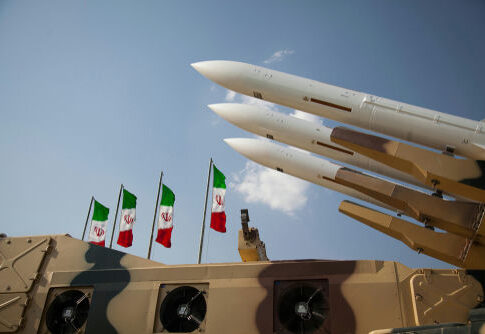
Every time Washington and Tehran inch toward a ceasefire or framework deal, Iran’s hardliners treat the prospect of peace not as a policy dispute but as an existential threat to their power—so their calls to keep striking U.S. assets and to dismiss Donald Trump’s “great settlement” as manipulation are best understood as part of a long-running internal struggle over who owns Iran’s war-and-peace narrative.
Key Points
- Iranian hardliners are openly challenging the emerging U.S.–Iran memorandum of understanding, branding Trump’s touting of a “great settlement” as deception and urging continued military pressure.
- The leaked 14‑point U.S.–Iran MOU, by contrast, contains explicit commitments to halt fighting, ease sanctions, and reaffirm Iran’s renunciation of nuclear weapons—undercutting claims that the deal ignores core security issues.
- This clash sits inside a familiar structural pattern: whenever talks with Washington advance, IRGC‑aligned factions mobilize in the streets, in parliament, and in media to defend leverage, revenue, and ideological identity.
- Because the Supreme Leader’s office remains publicly ambiguous, the real contest is not simply over Trump’s deal, but over who in Tehran will define Iran’s strategic line—and whether hardliners can keep diplomacy on a short leash.
Hardline Rejection: Sustaining War as a Political Asset
In the current round of negotiations, hardline voices in Iran have moved quickly to frame Trump’s claim of a pending “great settlement” as manipulation and weakness. A CNN report describes a prominent hardline legislator warning that Trump’s declarations about rapid progress should be treated as political theater, not fact, and urging Iranian forces to persist in their assaults despite talk of a ceasefire. Tasnim, a semi‑official outlet close to the Revolutionary Guards, reinforced that line, insisting that any American narrative of an imminent breakthrough is “not credible” unless and until an official Iranian announcement is made. The point is not just procedural; it is a way to deny Trump the ability to define reality inside Iran’s domestic arena.
That rhetoric is backed by behavior. IRGC‑linked media and outlets like Press TV have argued that Iran’s period of restraint is over, framing recent missile and drone strikes as an application of “qualitative asymmetry,” a doctrine that emphasizes unpredictable, non‑proportional responses rather than calibrated tit‑for‑tat. Lawmakers have gone so far as publicly calling for expanding missile ranges until they can reach Washington—symbolic bravado, but also a signal that for segments of the elite, escalation remains a currency of status. Social media footage shows hardline rallies late into the night, with IRGC members visibly present and slogans demanding defiance and revenge. These are not spontaneous eruptions; they are organized performances of resistance aimed at both domestic audiences and negotiators watching from abroad.
What is striking about this hardline posture is how little it relies on concrete critique of the emerging agreement. The charges of “deception” and “capitulation” rest on general suspicion of Trump’s rhetoric and of any bargain with the United States, not on a detailed inspection of the text. Hardline analysts have stressed that Iran’s negotiating position has publicly focused on ending the war and restoring maritime security, implying that nuclear issues are being sidestepped—but they have not produced documentary evidence that the framework actually excludes nuclear constraints. Their case is fundamentally political: peace, especially peace brokered by Trump, is treated as a threat to the ideological and institutional architecture of the Islamic Republic.
What the 14‑Point MOU Actually Says
When you place this hardline rhetoric against the leaked 14‑point Memorandum of Understanding between the United States and Iran, the gap between accusation and text becomes clear. The MOU, circulated by U.S. officials and published by outlets like Time and CBS, calls for the “immediate and permanent termination of military operations on all fronts,” explicitly including proxy theaters such as Lebanon. It commits both sides to refrain from initiating warfare and to wind down ongoing attacks—hardly the picture of a secretly permissive or one‑sided arrangement.
On the economic and maritime front, the agreement obliges Washington to end its naval blockade of the Strait of Hormuz within 30 days, while Iran restores traffic to pre‑war levels and allows commercial ships toll‑free passage for an initial 60‑day period. For hardliners who have framed control of Hormuz as a strategic trump card, this is precisely the sort of compromise they fear: the IRGC’s ability to leverage disruptions in global energy flows would be curtailed in exchange for sanctions relief and reconstruction funds.
The nuclear provisions cut even closer to the core of the ideological dispute. Paragraph 8 of the MOU reaffirms that Iran will not “procure or develop nuclear weapons,” and sets out a mechanism for dealing with enriched material: on‑site down‑blending under International Atomic Energy Agency (IAEA) supervision. A related clause freezes the nuclear status quo during the 60‑day ceasefire, with no new sanctions and no additional forces deployed by either side. In public explanations, NPR and the BBC note that the agreement would establish a $300‑billion reconstruction and economic development fund for Iran, funded in part by Gulf Arab states, paired with immediate sanctions relief and waivers for oil exports. The draft is not a comprehensive nuclear treaty, but it unmistakably links peace to nuclear restraint and economic reintegration.
From a technocratic standpoint, critics like Ben Rhodes warn that on‑site down‑blending without removal of stockpiles still leaves Iran with the ability to re‑enrich material if political conditions change. That concern is real and points to weaknesses in verification and long‑term enforceability. Yet it is distinct from the hardline claim that the deal simply ignores nuclear issues or amounts to unilateral surrender. The text shows otherwise: it is an interim political bargain designed to halt a costly war, stabilize energy markets, and create space for more detailed follow‑on negotiations.
Inside Iran’s Fragmented State: Why Hardliners Push Back
To understand why hardliners are calling for renewed assaults rather than testing a ceasefire, you have to look at the structure of the Iranian state. Empirically, nearly every major negotiation cycle with the United States since the revolution has triggered a mobilization of hardline factions—parliamentarians tied to the Paydari Front, IRGC commanders, and media networks aligned with the Supreme Leader’s office—who frame compromise as treachery and rally supporters around slogans of resistance. DW and Iran International document how, as leaked MoU details circulated, factions that had been relatively quiet during the height of the fighting suddenly took to the streets, accusing negotiators of dangerous concessions and demanding an end to talks.
Their incentives are structural. War—especially a war that dramatizes Iran’s defiance of the United States and Israel—has been central to the IRGC’s institutional identity and to the legitimacy of many hardline politicians. The Revolutionary Guards control revenue‑generating ports and petroleum facilities; as military analyst Mike Lyons notes, U.S. targeting strategies explicitly focus on these assets to “squeeze” Iran’s ability to generate cash without destroying the state outright.[US–Iran War Escalates transcript] Any deal that normalizes trade, reduces the risk premium on Gulf shipping, and routinizes nuclear oversight necessarily shifts power toward technocrats, civilian ministries, and moderate politicians like President Masoud Pezeshkian, who campaigned on sanctions relief and engagement. Hardliners are trying to prevent precisely that rebalancing.
At the same time, the Iranian system is not monolithic. The Institute for the Study of War’s Critical Threats Project emphasizes that the “hardline faction” itself spans a spectrum of actors with different priorities and levels of pragmatism. Some IRGC figures, for example, may see advantage in a limited ceasefire that preserves their control over strategic assets like Hormuz while easing immediate pressure. Others, such as former commanders who now wield symbolic authority, insist that negotiations stop until all sanctions are lifted and frozen funds released, an unrealistically maximalist position. This diversity produces a politics of permanent contestation: no single faction can fully own the state’s line on talks, and every new draft agreement becomes a proxy battle over who is truly guarding the revolution.
Trump, Netanyahu, and the External Pressure System
The hardliners’ framing of Trump and Netanyahu is also shaped by the way external pressure is applied. Trump has oscillated between maximal threats—promising that Iran “will no longer exist” if it crosses certain lines—and public optimism about imminent deals.[Bloomberg This Weekend transcript] He has boasted that Israeli Prime Minister Benjamin Netanyahu will do “whatever I want” on Iran, reinforcing the perception among Iranian conservatives that any agreement is embedded in a wider U.S.–Israeli coercive strategy rather than genuine mutual compromise. For hardliners, this dual track of pressure and performative optimism is easy to cast as manipulation: bombast about deals is read as a cover for ongoing containment.
Yet the external environment also creates strong counter‑incentives for peace. The war has driven volatility in global energy markets; as the ceasefire window opened and talk of an agreement gained traction, U.S. crude prices slipped below $70 per barrel and retail gasoline began to fall toward $3.90 a gallon.[NBC midterm and Iran segment] Shipping corporations have rerouted through the Panama Canal and alternative lanes near Oman, but the threat of mines and drone attacks in Hormuz has imposed heavy costs.[Bloomberg This Weekend transcript] Gulf allies, worried about both Iranian missiles and American unpredictability, have privately pushed Trump to call off new strikes and keep negotiations alive. These economic and regional security pressures make the case for at least a temporary settlement compelling for many actors—inside and outside Iran—who do not share the IRGC’s institutional stake in perpetual confrontation.
Ambiguity from the Supreme Leader and the Limits of the Deal
One of the most important—and underappreciated—features of the current moment is the silence, or at least public ambiguity, from the Supreme Leader’s office. Reports highlight hardliners questioning whether the emerging framework truly has Mojtaba Khamenei’s backing, and note that many officials “do not know what we are giving up and what we are actually gaining,” learning about negotiations primarily through television. This fog of uncertainty allows multiple narratives to coexist: moderates present the MOU as a necessary step to protect Iran from further devastation; hardliners depict it as secret surrender to American and Israeli demands; and the Leader’s circle avoids binding itself too early to any path that might later prove costly.
From a strategic perspective, that ambiguity is rational. Analysts at Al Jazeera’s studies center argue that durable, comprehensive agreements between Iran and the United States are structurally hard to achieve, given divergent perceptions of the war, differences in desired scope (limited security arrangements versus broad nuclear and regional constraints), and mutual distrust. They suggest that more limited ceasefires and reciprocal commitments not to expand military action are both more feasible and more useful as tests of the other side’s intentions. The 14‑point MOU fits this template: it is not a final settlement, but a provisional structure aimed at turning off the shooting while the political class in both countries assesses whether deeper normalization is possible.
Ben Rhodes and other veterans of prior negotiations warn that the current U.S. team lacks the technical depth needed to translate such a provisional frame into a verifiable nuclear arrangement.[Ben Rhodes Warns transcript] On the Iranian side, moves in parliament to consider withdrawal from the Nuclear Non‑Proliferation Treaty and to end cooperation with the IAEA illustrate how a latent desire for a “breakout” option persists, particularly among those who see nuclear capability as the ultimate insurance policy against regime change. In this environment, hardline skepticism about any text that promises both sanctions relief and nuclear oversight is not entirely irrational; it reflects genuine fears that once Iran steps back from confrontation, its bargaining position will erode faster than its adversaries’.
What This Power Struggle Means Going Forward
The evidence we have does not support the hardliners’ strongest claim—that Trump’s “great settlement” is a straightforward trap that ignores nuclear risks and strips Iran of leverage without compensation. The released text and accompanying explanations show a deal that ties ceasefire, sanctions relief, maritime de‑escalation, and a reaffirmation of Iran’s anti‑nuclear‑weapons pledge into a single, time‑bound framework. At the same time, their deeper concern—that such a framework will redistribute power inside Iran away from military institutions and toward technocrats, moderates, and external monitors—is well grounded in both history and the structure of the arrangement.
For outside observers, the critical insight is that Iran’s response to Trump’s deal is not simply a question of “is the text good or bad,” but of who in Tehran gets to answer that question. As long as the Supreme Leader’s position remains opaque and the IRGC retains de facto control over key economic and military assets, hardliners will have both the means and the motive to call for more strikes, more rallies, and more resistance—even when a ceasefire could prevent “absolute ruin,” as one social‑media commentator starkly put it. Conversely, if moderates and technocrats can prove that a limited agreement improves ordinary Iranians’ lives without collapsing the regime’s security posture, the political space for a more stable accommodation may widen.
That contest will not be settled by Trump’s rhetoric or Netanyahu’s calculations alone. It will hinge on how Iran’s fragmented elite weighs the costs of continued war against the risks of managed peace—and on whether the institutions built to fight can accept a future in which their survival depends less on missiles and more on the quiet, unglamorous work of economic recovery and nuclear verification.
A power struggle inside the Iranian government is threatening US-Iran negotiations, The Wall Street Journal reports. Moderates are pushing to unlock billions of dollars frozen in Qatar, which could ease tensions and open the door for a deal. Hardliners in the military, however,…
— wgbk (@War_gods_BK) June 30, 2026
Analytical Questions for Further Watch
Several questions will determine whether this moment becomes a hinge toward durable de‑escalation or another brief pause in a hostile trajectory. Will the text of any final agreement match the leaked draft, especially on nuclear material and IRGC economic interests? Will independent audits of ports and petroleum facilities confirm that IRGC revenue is being constrained or protected? Will IAEA reporting on enrichment levels show genuine technical limits on breakout capacity, or simply cosmetic changes? And most importantly, will internal Iranian communications—formal statements, parliamentary debates, and quiet signaling from the Leader’s office—move toward ownership of a negotiated framework, or revert to the familiar posture that treats every handshake with Washington as the prelude to betrayal?
Sources:
redstate.com, cnn.com, fortune.com, iranintl.com, understandingwar.org, instagram.com, mwi.westpoint.edu, youtube.com, cfr.org, en.wikipedia.org, npr.org, dw.com, studies.aljazeera.net, britannica.com
Its clearly time to take the hardliners down. Peace can never be achieved with them overriding any agreements. Besides it is questionable whether Iran will keep any agreement anyway